Air sock cleaning for food production facilities is an important part of maintaining high standards of hygiene within manufacturing, preparation and temperature-controlled environments.
In food production environments, maintaining hygiene extends far beyond floors, machinery and food-contact surfaces. High-level ventilation systems, including fabric air socks, can also form an important part of a facility’s cleaning and maintenance programme.
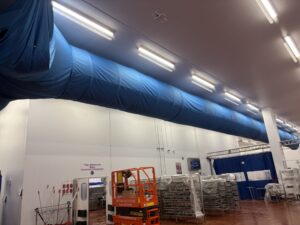
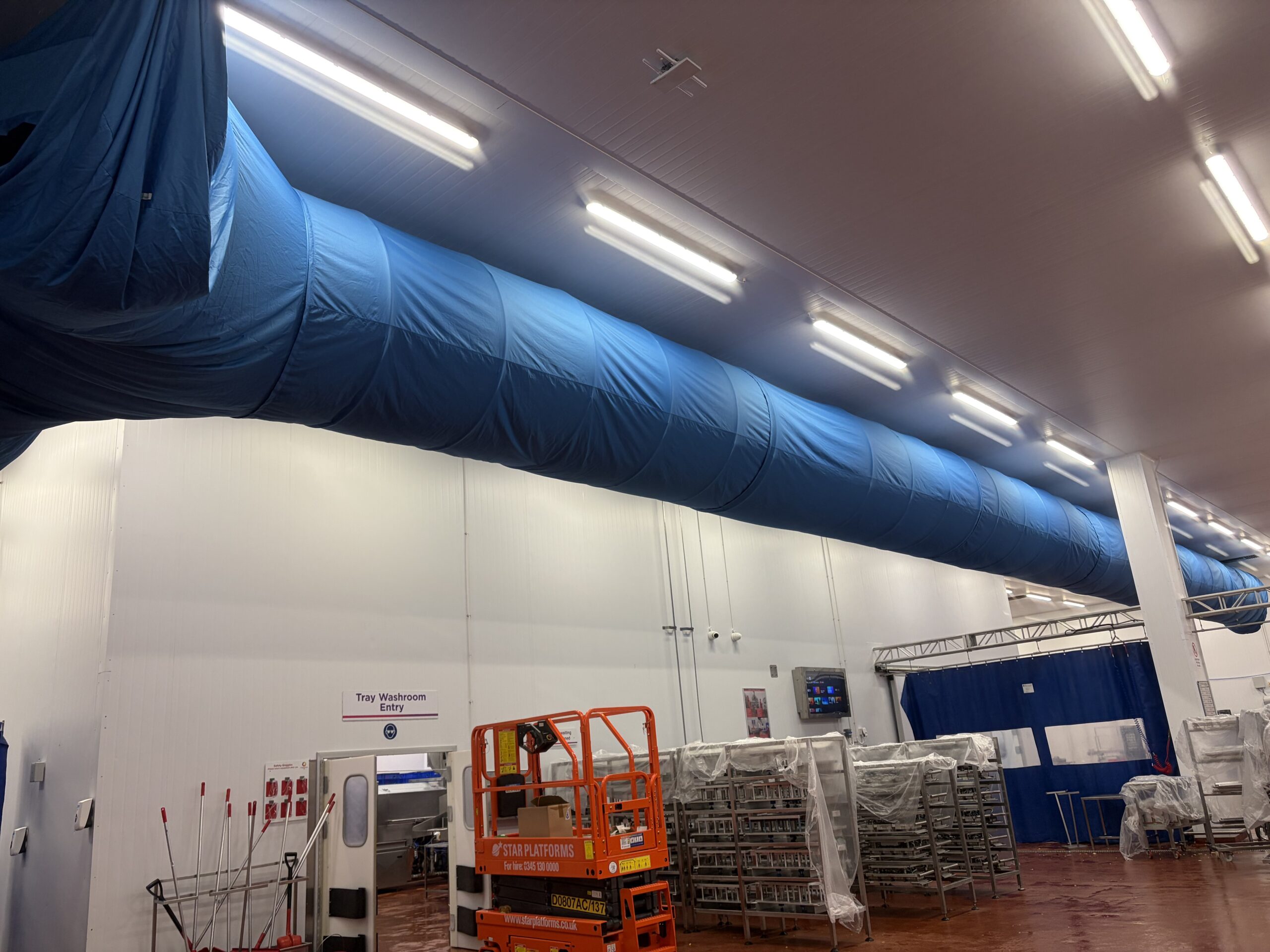
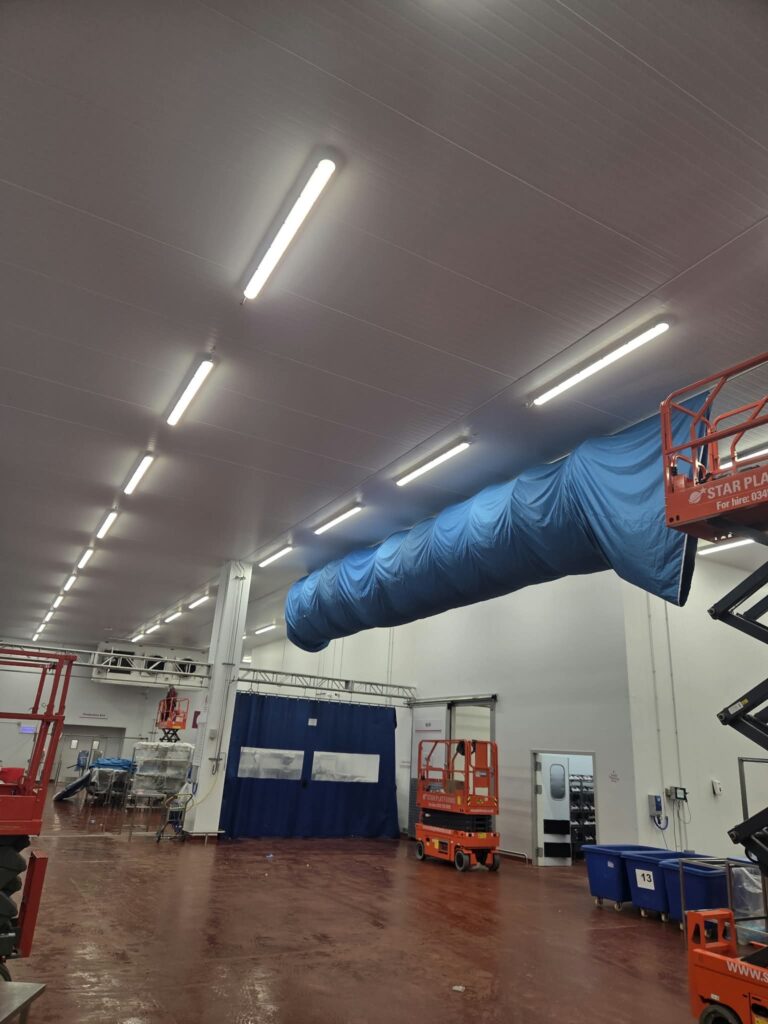
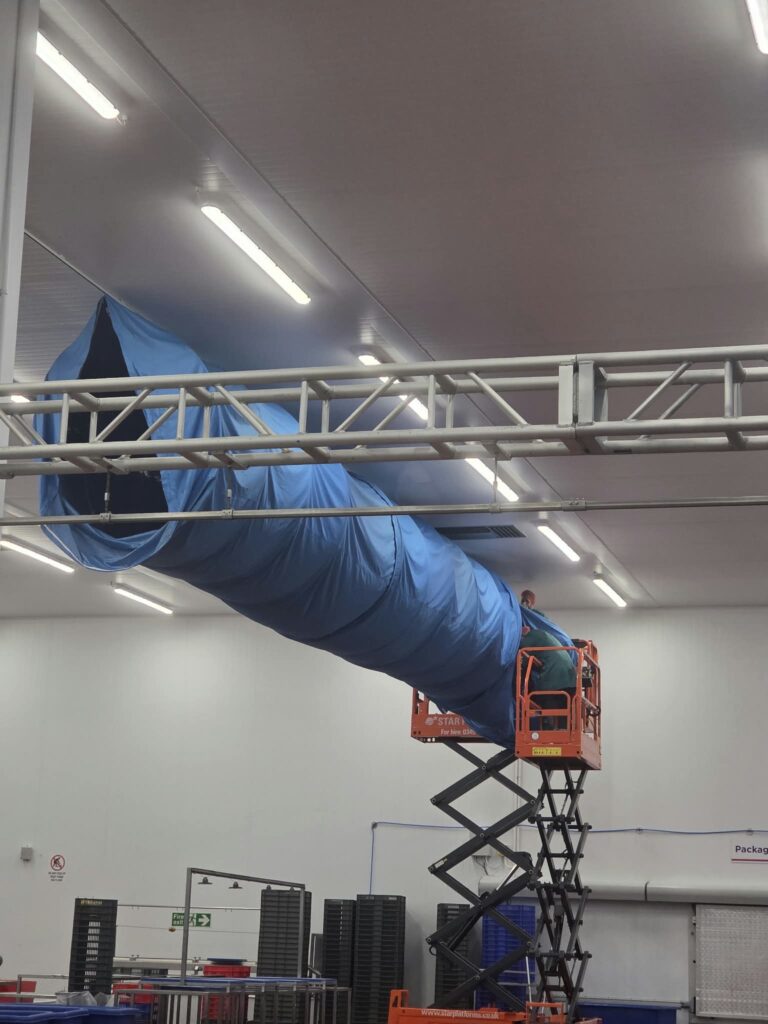
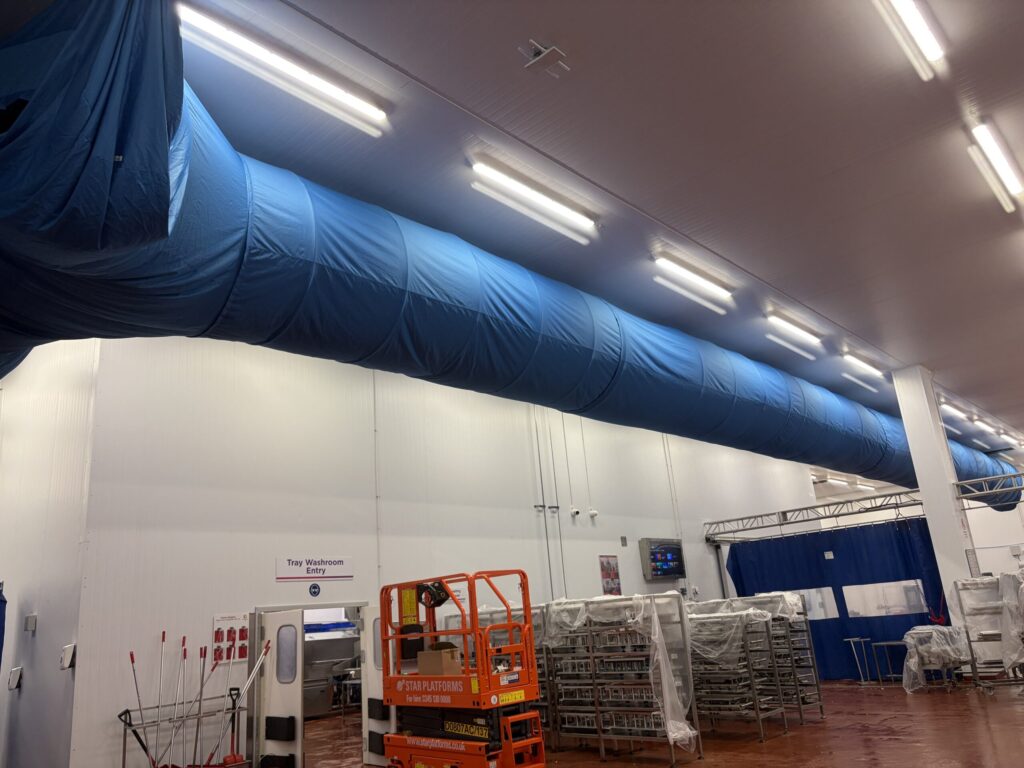
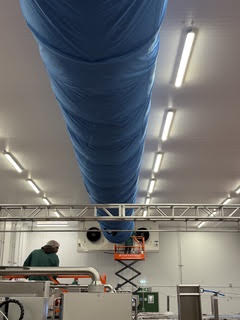
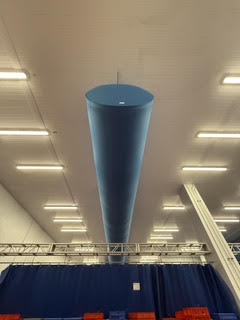
Air socks – also known as fabric ducts, textile ducts or fabric air diffusers – are commonly used within food manufacturing and temperature-controlled environments to distribute conditioned air evenly throughout production, preparation and storage areas.
Because these systems continuously move air around the facility, keeping them clean is particularly important.
Over time, dust, airborne particles and other contamination can accumulate on the fabric. Without appropriate inspection and cleaning, this can affect the cleanliness of the system and potentially compromise the standards expected within a controlled food-production environment.
Professional air sock cleaning for food production facilities helps maintain hygienic air distribution systems while supporting wider site cleaning, food-safety and preventative-maintenance programmes.
Why Is Air Sock Cleaning for Food Production Important?
Food production facilities operate under demanding hygiene conditions.
While routine cleaning programmes naturally concentrate on production equipment and accessible surfaces, contamination can also accumulate at high level.
Air socks are often positioned directly above production lines, preparation areas, conveyors, packing equipment and storage locations.
As air continuously passes through the system, the external and internal surfaces of the fabric can gradually become contaminated.
Potential contaminants can include:
- Dust.
- Airborne food particles.
- Flour and other fine powders.
- Grease and oils.
- General atmospheric contamination.
- Insects and organic debris.
- Mould or microbial contamination where conditions allow.
- Contamination generated by surrounding production processes.
The Food Standards Agency emphasises the importance of effective cleaning and preventing cross-contamination as fundamental parts of food hygiene.
Maintaining clean air socks should therefore form part of the wider approach to maintaining a clean food-production environment.
Air Socks and Food Hygiene Compliance
Food businesses have a responsibility to ensure that food is produced, processed and handled safely.
UK food hygiene requirements include provisions concerning suitable ventilation and require ventilation systems to be constructed so that filters and other components requiring cleaning or replacement are readily accessible.
These requirements can be viewed within Regulation (EC) No 852/2004 on the hygiene of foodstuffs.
The condition of the wider production environment is also important. Food Standards Agency guidance states that food preparation areas and their surfaces should be maintained appropriately, with ceilings designed and maintained to prevent dirt accumulation, condensation, mould and deterioration.
Further information is available within the Food Standards Agency’s food premises guidance.
For food manufacturers operating audited hygiene and food-safety systems, being able to demonstrate that high-level areas and ventilation components are included within planned cleaning programmes can also provide valuable evidence of proactive hygiene management.
What Happens When Air Socks Become Dirty?
Because air socks are normally positioned overhead, contamination can develop gradually without being immediately noticed.
A fabric duct that appears relatively clean from floor level may show considerably more contamination when inspected closely.
Common problems can include:
Dust Build-Up
Fine airborne particles can settle on the surface of the fabric and around air distribution openings.
Blocked or Restricted Perforations
Accumulation around the openings within the fabric may interfere with the intended distribution of air.
Visible Staining
Grease, production residue, moisture and airborne contamination can leave fabric ducts visibly discoloured.
Potential Contamination Above Production Areas
Where dirty fabric ducts are located above open production or food-handling areas, contamination at high level becomes particularly undesirable.
Mould and Microbial Growth
Where moisture and suitable environmental conditions are present, poorly maintained surfaces can potentially support microbial contamination.
Reduced Presentation Standards
Heavily contaminated air socks can undermine the appearance of an otherwise well-maintained production facility, particularly during customer or hygiene audits.
Professional Air Sock Cleaning
Cleaning fabric air socks requires a different approach from cleaning conventional metal ductwork.
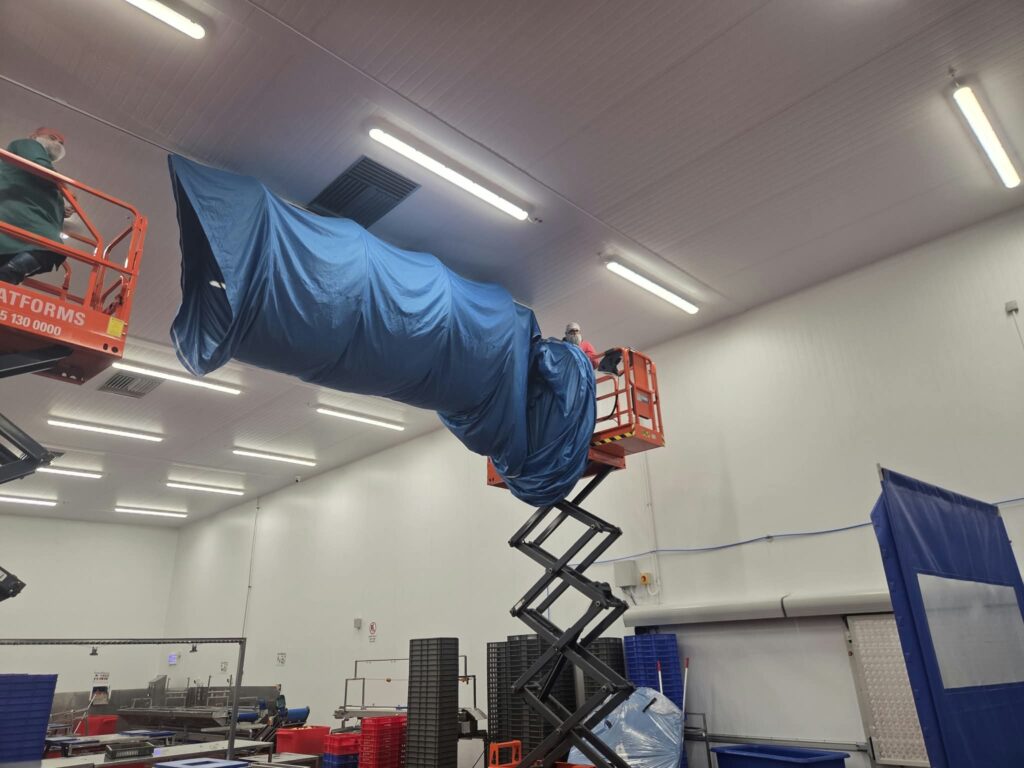
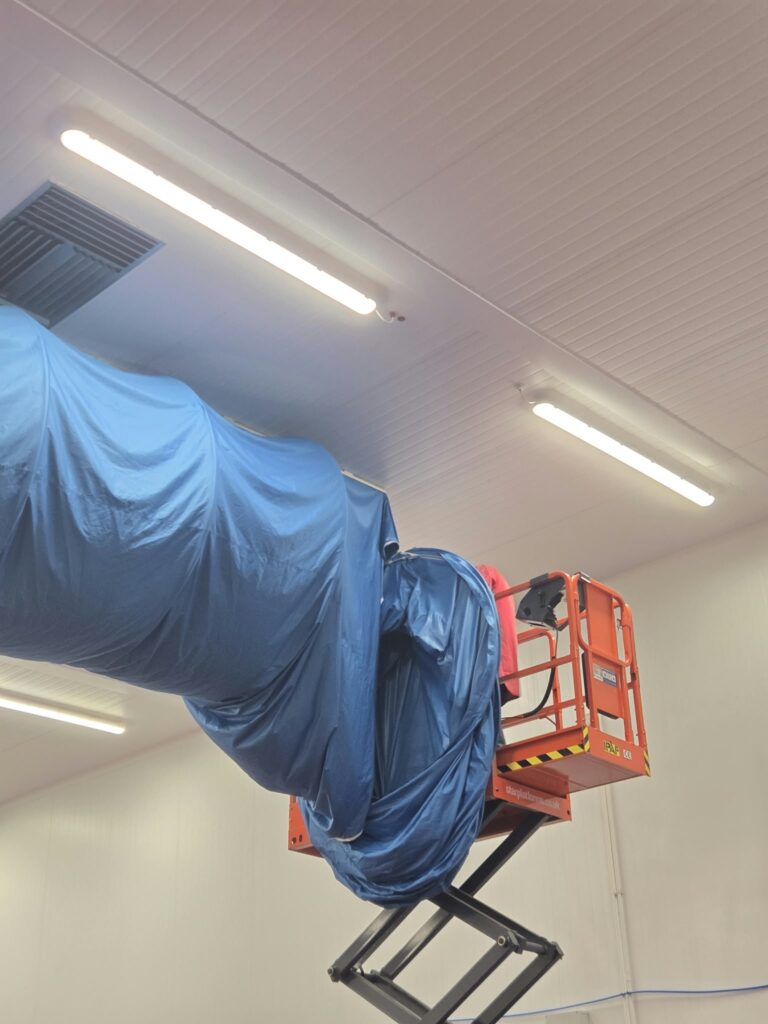
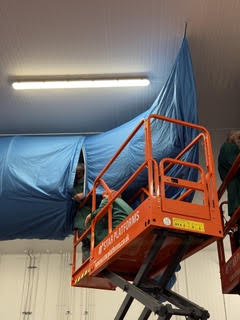
Depending on the manufacturer, fabric type, level of contamination and installation, the air socks may be removed from their suspension system so they can be professionally cleaned.
The manufacturer’s cleaning instructions should always be considered before determining the appropriate cleaning process.
A typical programme may involve:
- Surveying the installation and condition of the air socks.
- Identifying individual sections and their locations.
- Safely accessing high-level systems.
- Carefully removing fabric duct sections.
- Inspecting the fabric for contamination or damage.
- Cleaning using a process appropriate for the particular material.
- Using suitable detergents or disinfectants where specified and appropriate.
- Drying the fabric correctly.
- Inspecting suspension components and accessible surrounding areas.
- Reinstalling each section in its correct location.
- Checking the finished installation.
- Providing photographic evidence and a post-cleaning report.
The exact process should always be determined by the construction and manufacturer’s instructions for the particular system.
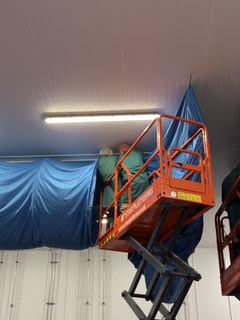
Protecting Food Production During Cleaning
Cleaning equipment positioned directly above a food-production environment requires careful planning.
ACC Commercial Cleaning works with the site team to establish an appropriate cleaning programme before work begins.
Depending on the facility and production schedule, controls can include isolating the work area, protecting equipment and surfaces below, establishing exclusion zones and scheduling works around production.
Where appropriate, cleaning can be undertaken during planned shutdowns, hygiene windows, weekends or out-of-hours periods to reduce disruption to production.
This is particularly important when air sock cleaning is combined with other specialist services such as commercial chiller, freezer and ambient storage cleaning.
Air Sock Cleaning and HVAC Maintenance
Air socks form part of a wider air distribution system.
Cleaning the fabric while ignoring heavily contaminated upstream components may not provide an effective long-term solution.
For this reason, it can be beneficial to inspect the condition of the associated ventilation system at the same time.
ACC can combine air sock cleaning with specialist HVAC cleaning to help clients develop a more comprehensive approach to ventilation hygiene and system maintenance.
The HSE also highlights the importance of adequate workplace ventilation and explains that ventilation involves introducing fresh air and removing stale, hot, humid or contaminated indoor air. Further information is available through the HSE’s workplace ventilation guidance.
Don’t Forget the Ductwork
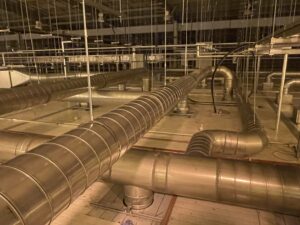
The condition of the ductwork supplying the fabric air socks should also be considered.
Dust and contamination can accumulate within ventilation systems over time, which is why inspection and planned commercial air duct cleaning can form an important part of a wider ventilation hygiene programme.
The current BS EN 15780:2025 provides requirements and guidance concerning the cleanliness of ventilation systems, including cleanliness assessment and maintenance procedures. Further information is available from the British Standards Institution.
Combining the inspection of ductwork, HVAC equipment and fabric air distribution systems can provide facilities and hygiene teams with a much clearer understanding of the overall condition of their ventilation system.
Cleaning the Wider Food Production Environment
Air sock cleaning is most effective when considered as part of the site’s overall hygiene programme rather than as an isolated task.
High-level beams, ceilings, pipework, cable trays, ventilation equipment and other overhead structures can all accumulate contamination.
ACC’s internal high-level cleaning service can be combined with air sock cleaning to tackle these difficult-to-access areas during the same programme.
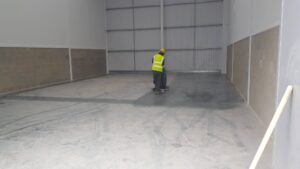
Likewise, production and warehouse floors experience constant contamination from pedestrian traffic, forklifts, pallet movements, spills and production activity.
Our specialist warehouse floor cleaning service can form part of a complete cleaning programme covering both high and low-level areas.
The HSE’s food and drink manufacturing guidance provides further information regarding health and safety within this demanding sector.
How Often Should Fabric Air Socks Be Cleaned?
There is no single cleaning frequency suitable for every food-production facility.
The appropriate frequency depends on factors including:
- The type of food being produced.
- Whether food is exposed beneath the system.
- Levels of airborne contamination.
- Production hours.
- Temperature and humidity.
- Manufacturer recommendations.
- Previous inspection findings.
- Internal hygiene standards.
- Customer and third-party audit requirements.
Some facilities may require cleaning as part of a predetermined hygiene schedule, while others may use routine inspection to determine when cleaning is required.
Rather than waiting until fabric ducts become heavily contaminated, a planned inspection and cleaning programme allows deterioration to be identified earlier.
Benefits of Regular Air Sock Cleaning
Improved Hygiene
Removing accumulated contamination helps maintain the high standards expected within food-production and food-storage environments.
Better Air Distribution
Keeping the fabric and its air distribution openings clean helps maintain the system in its intended condition.
Reduced Contamination Risk
Regular cleaning removes accumulated material from equipment positioned above sensitive production and storage areas.
Improved Audit Readiness
Documented cleaning and photographic reporting can help demonstrate that difficult-to-access and high-level areas are incorporated into the site’s hygiene programme.
Improved Appearance
Clean fabric ducts contribute to the overall presentation and condition of the production facility.
Planned Preventative Maintenance
Regular inspection allows damage, staining and excessive contamination to be identified before they develop into larger problems.
How ACC Commercial Cleaning Can Help
ACC Commercial Cleaning provides specialist cleaning services for food-production, manufacturing, storage and distribution environments.
We understand that cleaning within an operational food facility requires considerably more planning than simply accessing an area and cleaning it.
Our team can work with your hygiene, engineering and facilities departments to develop a programme around your site’s production requirements.
Our air sock cleaning service can include:
- Initial site survey.
- Inspection of fabric duct condition.
- Safe removal and identification of air sock sections.
- Specialist cleaning in accordance with the requirements of the fabric.
- High-level access where required.
- Protection of production areas and equipment.
- Reinstallation of cleaned air socks.
- Before-and-after photographs.
- Post-cleaning reporting.
- Recommendations for future inspection and cleaning frequencies.
- Integration with wider HVAC, ductwork and high-level cleaning programmes.
Where required, works can be scheduled out of hours or during planned shutdown periods to minimise disruption to production.
Why Choose ACC Commercial Cleaning?
ACC Commercial Cleaning has experience working within demanding commercial, industrial and food-production environments.
We understand the importance of hygiene, planning, safe systems of work and minimising disruption to operational facilities.
Rather than treating an air sock as an isolated item, we can also look at the surrounding environment and identify where additional cleaning may be beneficial.
This allows clients to combine services and tackle multiple hygiene requirements within a coordinated programme.
Whether you have a small number of fabric ducts within a chilled production room or an extensive air sock installation across a large food-manufacturing facility, ACC can develop a cleaning programme around your operation.
Conclusion
Fabric air socks provide an effective method of distributing conditioned air throughout food-production and temperature-controlled environments, but their high-level position can mean they are easily overlooked during routine cleaning.
Dust, production residue and airborne contamination can gradually accumulate on these systems, particularly within busy manufacturing facilities operating for extended hours.
Regular inspection and professional cleaning helps maintain their condition, supports wider hygiene programmes and ensures high-level ventilation components receive the same attention as the production environment beneath them.
If your air socks have become visibly contaminated, have not been cleaned recently or you are reviewing your site’s planned hygiene programme, ACC Commercial Cleaning can carry out a survey and recommend an appropriate cleaning solution.